

Latest
The Sustainable Development Goals in Nepal
Nepal committed to the SDGs early on, and this commitment has been reaffirmed in key policy documents, such as the current 15th Development Plan and the 25 Year Long-Term Vision 2100 that internalises the Goals. SDGs codes are assigned for all national development programmes through the Medium-Term Expenditure Framework. Further, Nepal has prepared the SDG Status and Roadmap to localize the SDG indicators with baselines and targets for 2030. Other key documents are a SDGs Needs Assessment, a Costing and Financing Strategy, and additional SDGs Localization Guidelines. Finally, Nepal has conducted a Development Finance Assessment (DFA) to provide an overview of development finance flows and institutions and policies that can align finance with national development priorities. These are the goals the UN is working on in Nepal:

Publication
04 September 2026
Flash Appeal: Rasuwa Floods
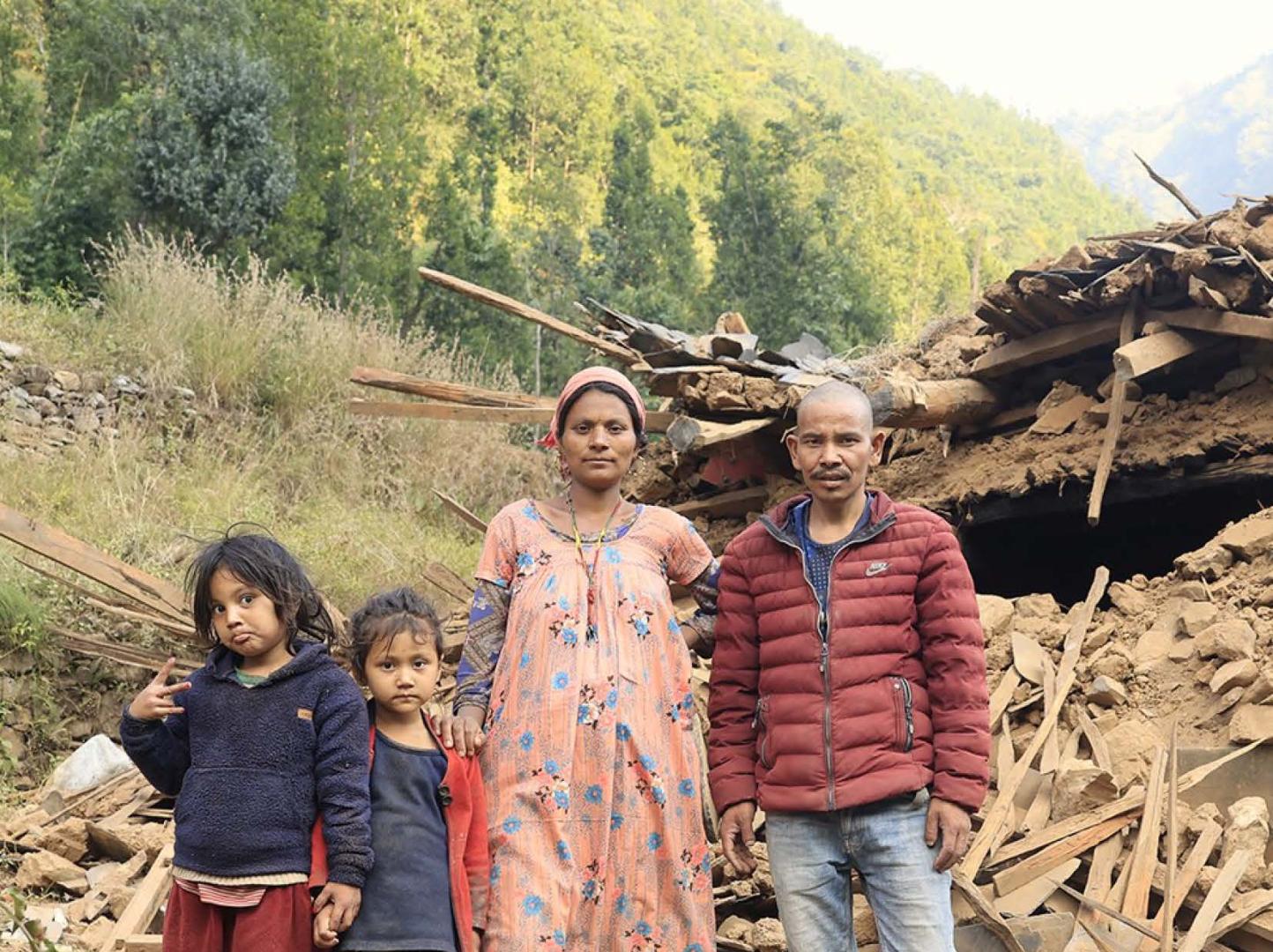
Nepal’s Flash Appeal calls for US$49.5 million to support over 84,000 people affected by the catastrophic floods in northern Nepal.The four-month appeal supports the Government-led response to urgent humanitarian needs across six affected districts, including food, shelter, health care, clean water and sanitation, protection and other essential assistance. As winter approaches, the appeal aims to reach affected communities — including those in remote and high-altitude areas — with timely, coordinated support while helping families protect their livelihoods and begin to recover.

Story
23 October 2026
One roof. One team. One UN: How working together made a difference after Nepal's floods
In a crisis, every hour matters.A road washed away can mean a family cut off from food. Contaminated water can turn displacement into a public health emergency. A pregnant woman stranded across a river may suddenly find herself miles away from the care she needs. A school destroyed, can mean children loosing the opportunity to learn. Witnessing your loved ones being taken by a gigantic wave of water, mud, and stone can be a long period of trauma.And sometimes, the difference between a problem identified and a problem solved is simply having the right people in the same room.That is the story of a small, but mighty, UN coordination hub in Bidur, Nuwakot, which was established just one week after the flash floods tore through Rasuwa and neighbouring districts on 26 August.Humanitarian workers from different UN agencies came together, sharing information, co-creating solutions and finding ways to reach communities whose lives were turned upside down overnight.The benefits of working together became clear almost immediately.When UNICEF's water and sanitation teams detected bacterial contamination, they worked with WHO colleagues supporting water-quality monitoring and testing. An on-site laboratory helped identify potential health risks before they could escalate.When access roads became impassable, logistics colleagues could be alerted directly. When families in temporary shelters needed healthcare, protection or other services, several agencies were only a conversation away.One FAO colleague said "We didn't have to start from scratch. The relationships were already there, the information was being shared, and colleagues from different agencies were working towards the same goal. Being here together has made it easier to understand what communities need and respond collectively" — a sentiment echoed by others during a visit by the UN Resident Coordinator on 30 September.It was clear that coordination is not an end in itself. It is how help reaches people.WFP's logistics expertise has helped move humanitarian supplies through difficult terrain, providing cargo helicopters and drones for transport and shared storage facilities.IOM has strengthened coordination in displacement sites, where families face overcrowding, inadequate drainage and uncertainty about their future.UNFPA has worked with local health authorities to identify gaps in maternal healthcare, provide psychosocial support and deliver essential supplies for women and girls.FAO is looking beyond immediate relief to the livelihoods swept away by the floods, helping communities find a path back to farming and income.UNDSS is working closely with authorities to ensure travel movements of UN personnel are safe and secure.RCO and OCHA has helped bring these efforts together, supporting Government-led coordination involving more than 100 NGOs and associations alongside UN agencies and other partners.Each UN agency brings different expertise. Together, they see the bigger picture: A flooded road is not just a logistics problem. It becomes a health problem when patients, especially elderly, women and children, cannot reach hospitals. A food security problem when farmers cannot reach markets. A protection concern when families, especially adolescent and youth, remain stranded in unsafe shelters.This is why the UN's coordination hub in Bidur has been a lifeline for affected communities.“When disaster strikes, people don't see different UN agencies. They see the United Nations, and they expect us to deliver. What I witnessed in Bidur is the spirit of One UN in action: colleagues working across mandates, sharing resources and finding solutions together. Because ultimately, what matters is not who delivers the assistance, but that it reaches the people who need it most,” said Lila Pieters Yahia, UN Resident Coordinator in Nepal.As we mark United Nations Day, the experience in Bidur offers a powerful reminder of what the UN can achieve when it works as one. By bringing together expertise, resources and people around a common purpose, the UN in Nepal's support to the Government-led response was stronger.There is still much to do. Families, need safe shelter. Communities need healthcare, clean water, and access to markets. Livelihoods must be rebuilt.And the work together continues, one challenge, one conversation, and one collective decision at a time.Because when disaster strikes, the strength of the UN is not measured by how many agencies respond. It is measured by what can be achieved together.
1 of 5

Story
16 October 2026
Behind Every Safe Journey
The flood did not just take the bridges. It cut communities away from lifelines.On 26 August, when floodwaters tore through Rasuwa and neighbouring districts, roads disappeared, bridges collapsed and entire stretches of land became unrecognizable in seconds.Somewhere beyond the broken roads were families waiting for help.And somewhere on the other side were humanitarian workers trying to reach them.Between the two lay a question that no amount of relief supplies could answer.How do we get there?For the United Nations Department of Safety and Security (UNDSS), that question became a daily responsibility.The first task was to account for UN personnel. Were they safe? Could they be reached? Then attention turned to the roads, bridges and mountainsides standing between humanitarian teams and the affected communities.Maps could only tell part of the story. The flood had rewritten the landscape.Working with the Nepal Army, Nepal Police, Armed Police Force and local authorities, the UNDSS team in Nepal went looking for answers. Some came from the sky, through aerial assessments. Others came from the ground, where damaged roads and bridges had to be examined before anyone could safely pass. In Bidur, where humanitarian partners established a coordination hub, UNDSS worked quietly behind the scenes.Security briefings. Road assessments. Weather warnings. Conversations with local authorities. Information gathered, checked and passed on to teams planning their next movements.None of it particularly visible. All of it necessary.Harder to count are the journeys that almost did not happen. The roads checked before a vehicle set off. The risks identified before a team entered an affected area. The decisions that helped people return home safely.And the work is far from over.As Nepal moves towards recovery, damaged roads, unstable terrain and the threat of further hazards continue to complicate access. UNDSS remains on the ground, helping humanitarian teams navigate the risks and reach communities safely.There is no ribbon to cut when a road is declared safe. No ceremony when a journey goes according to plan.But somewhere along that road, a family is waiting for help.And getting there safely is a priority.
1 of 5

Story
16 October 2026
A Harvest, an Inbox and a Helicopter
This World Food Day story does not begin in a field. It does not begin on a plate. It begins on 26 August, when the Bhotekoshi flood swept through Rasuwa and took lives, homes, bridges and roads with it.High above the river, in Aamachhodingmo Rural Municipality in Northern Rasuwa, the water never came. The indigenous Tamang farmers of Gatlang and Gre of Aamachhodingmo, watched their season ripen as planned. Cabbage. Potatoes. A cool-climate harvest that fetches good prices in the markets below.But the markets below were now out of reach. The flood had taken the road, the community’s one lifeline down the valley. Across four wards, an estimated Rs 80 million worth of vegetables sat in fields and sheds, waiting for a road that would not return any time soon. Then a message arrived in the inbox of the UN Nepal Facebook page. Someone had seen the farmers’ produce beginning to rot and wrote to ask if UN could help. The communications officer who read it did not let it sit. The message went, one by one, to the Resident Coordinator, to the UNDAC team and to the humanitarian team. A note from the public had become a question for the whole system.The Resident Coordinator picked it up and carried it. She reached out to the private sector, to local partners and to colleagues across the UN, asking what could be done.By then, the World Food Programme was already flying relief into northern Rasuwa. The helicopters went up full and came back empty. The Resident Coordinator’s Office saw the gap and made a simple suggestion: let them come back carrying cabbage.There was one problem. Aamachhodingmo had no helipad. So WFP teams helped build one, set out procedures and trained local teams to load produce safely.Through all of it, the Resident Coordinator kept Aamachhodingmo on the agenda. In coordination meetings, with partners, in every room she entered, she spoke of the farmers who had lost not their homes but their way to market. Repetition is not glamorous. In a crisis, it is how things move.On 9 October, working with local authorities and farmers’ cooperatives, WFP began flying produce from Gre to Bidur in Nuwakot. About 8,000 kilogrammes of cabbage and potatoes, finally in the markets they were grown for.It is a start, not a solution. Much of the harvest as many as 700 tons still waits, and lasting recovery depends on rebuilding the Bailey bridge at Syaphrubesi. Until then, people cross the river by tuin, a temporary cable crossing.On World Food Day, Aamachhodingmo is a reminder that a food system is more than fields and plates. It is also the connections between them, and the people who keep them open.But a message that could have been lost in an inbox reached the right people, and the right people did not let it go.They say the way to human’s heart is through the plate. For Aamachhodingmo, the way to the people’s heart and the plate ran through the sky.
1 of 5

Story
15 October 2026
From subsistence to enterprise: invest in women farmers to build climate resilience
Mantodiya Devi farms a plot of riverbed in Siraha that, three years ago, was sand and stone. Today, vegetables grow between fruit and forest trees. When I asked what would make the biggest difference to her family, her answer was simple: “If I had enough water, I would grow every coloured vegetable on my farm.”Her ambition is not the problem. Access is.Last week, during a mission to Saptari and Siraha in Madhesh Province, I met women transforming degraded land into productive farms, adopting new methods to grow rice and vegetables with less water, and turning local resources such as bamboo into products for sale.Their experience points to a fundamental question for climate adaptation: are we investing enough in women farmers to enable them not simply to survive climate change, but to build successful, climate-resilient businesses?In this International Year of the Woman Farmer, and as we mark International Women Farmers’ Day, the answer matters.Climate change is changing farming. Women need the means to change with it.Madhesh contains more than a quarter of Nepal’s rice land, and farming has long depended on predictable monsoon rains. That predictability is disappearing. In July 2025, the provincial government declared Madhesh drought-hit. By the end of that month, only about half of the province’s rice land had been transplanted, compared with 92 per cent a year earlier. Siraha was among the worst affected.For women farmers, adapting to these conditions requires more than working harder. It requires knowledge, technology and investment.Women need to know which crops and varieties are better suited to changing conditions, how to conserve soil moisture, manage increasingly scarce water and adjust planting practices. But knowledge alone is not enough. They also need access to irrigation, appropriate machinery, quality inputs and other technologies that allow them to put that knowledge into practice.When women have access to these resources, we already see what becomes possible.In Laxmipur Patari, I saw women growing paddy using the System of Rice Intensification, which requires less water, and using mulch in vegetable plots to retain soil moisture. Instead of purchasing machinery individually, farmers can hire it through a community service centre.Across five municipalities in Siraha and Saptari where local governments and the UN support rural women’s economic empowerment, 88 per cent of women in the programme have adopted climate-smart practices. Average farm income has increased by 63 per cent, vegetable yields have more than quadrupled, and women’s groups have sold NPR 21.2 million worth of produce to institutional buyers, including the government’s school meals programme.These figures tell an important story: investing in women farmers is not simply social support. It is an investment in productivity, climate resilience and local economies. The ambition must be bigger than subsistenceBut we should go further.The objective cannot be to keep women as subsistence farmers, only with slightly better tools. It must be to enable women to move from subsistence farming to running viable agricultural SMEs.That requires us to see a woman farmer not only as a producer, but as an entrepreneur.She needs agricultural knowledge to understand how climate change is affecting her farm and what she can do differently. She needs equipment and water infrastructure to put those practices into effect. But she also needs the capabilities to run a business: access to land and finance, financial literacy, business planning, storage and processing, market information and reliable connections to buyers.Today, those pieces do not always come together.Across the five municipalities, fewer than one in three women have access to labour-saving machinery. Only about a third use financial services. Banks often require land as collateral, while few women own land in their own names. Some women receive training in new agricultural practices but cannot afford the equipment needed to use them independently.This is the gap we need to close.A woman who learns a climate-resilient farming technique but cannot finance irrigation, machinery or inputs cannot fully adapt. A woman who increases her harvest but has nowhere to store, process or sell it cannot turn increased production into a sustainable enterprise.Invest in the whole pathwayIf we want women farmers to become drivers of climate resilience and rural economic growth, investment must connect the entire pathway: knowledge, technology, finance and markets. Governments and private sector need to expand agricultural extension and practical training so women can understand and adopt climate-resilient farming techniques. That must be matched with access to water-efficient irrigation, appropriate machinery, improved inputs and technologies that reduce labour while increasing productivity.Financial institutions also need mechanisms that allow women without land titles to invest in their farms and businesses. Group lending, credit guarantees and savings histories can provide alternatives to traditional collateral.And investment cannot stop at the farm gate. Women need storage, processing, business development and direct relationships with public and private buyers so that they can capture more of the value created by what they grow.Municipalities in Madhesh are already demonstrating what local investment can achieve. Across the five municipalities, local governments have committed NPR 5.61 million of their own resources to women-focused agriculture, enterprise and social protection alongside the Joint Programme on Rural Women’s Economic Empowerment run by FAO, IFAD, UN Women and WFP.That investment should be the beginning, not the end.Women farmers are an investment in Nepal’s climate futureClimate change is forcing agriculture to transform. Women must have the resources to lead that transformation.The choice is not between protecting traditional farming and abandoning it. It is about helping women transform farming into a modern, climate-resilient business that can generate income, create jobs and withstand a changing climate.That means moving beyond short-term projects and demonstration plots. It means giving women farmers sustained access to the knowledge, technology, equipment, finance and markets required to make their own investment decisions and grow their enterprises.Mantodiya Devi already knows what she wants to grow.Our task should not be to preserve her as a subsistence farmer. It should be to make sure that water, technology, knowledge and finance do not stand between her and the agricultural business she has the ambition to build.
1 of 5

Story
13 October 2026
Ready before disaster strikes: How pre-positioned funding helped Nepal respond to the floods immediately
When severe flash floods tore through Rasuwa and neighbouring districts in Northern Nepal on 26 August, communities had little time to react. Homes and infrastructure were destroyed, families displaced, and essential services disrupted. An estimated 84,000 people were affected, with thousands of households displaced and urgent needs emerging for food, water, shelter, health care, and protection. For humanitarian responders, the first hours and days after a disaster are critical. Yet this is often precisely when funding still needs to be mobilized, proposals need to be prepared, and administrative processes must be completed before any money is released.In Nepal, an initiative that was put in place before the disaster meant that the wait could be avoided.In 2025, the United Nations Resident Coordinator’s Office and the Embassy of Switzerland worked together on a simple idea: rather than wait for the next disaster to strike before mobilizing resources, why not have funding already available in the country, ready to be activated when it was needed?Through the Nepal Sustainable Development Cooperation Framework (NSDCF) Fund, Switzerland contributed US$1.175 million to a joint initiative implemented by WFP Nepal and UNICEF Nepal, to support response efforts led by the Government of Nepal. The project was explicitly designed to shift resources from reactive to proactive disaster management, including through pre-arranged financing and mechanisms for both anticipatory action and humanitarian response. “Disaster risk reduction has long been a priority for Switzerland’s cooperation with Nepal. We know that investing in preparedness saves lives and protects livelihoods. Through our partnership with the United Nations in Nepal, we wanted to ensure that when disaster strikes, the resources to respond are already in place. The recent floods have demonstrated why investing before a crisis is just as important as responding when it happens", said Dr. Danielle Meuwly, Ambassador of Switzerland to Nepal.
From anticipation to actionThe concept recognized a reality Nepal knows well: disasters are not unexpected events. Floods, landslides and earthquakes recur, and preparedness can determine how quickly assistance reaches people when they do.The mechanism was therefore designed with two possibilities in mind. Funding could support anticipatory action before forecast flooding, based on agreed triggers, or be activated for humanitarian response following a medium-scale disaster, according to needs and in coordination with the Government. That preparation mattered on 26 August.As the scale of the flooding became clear, the pre-arranged funding mechanism was activated within 24 hours since the onset of the emergency. Rather than beginning a new funding process from scratch, resources that had already been committed were directed towards the response.As pre-agreed, the funds were already with WFP and UNICEF to provide immediate life-saving support. The original programme had been deliberately designed around rapid assistance. Its planned interventions included multipurpose cash for vulnerable households, pre-positioned ready-to-eat food, early-warning messaging, child protection and psychosocial support, and emergency WASH assistance. “Every minute matters in an emergency. Thanks to Switzerland’s foresight and generous support, we had resources ready in-country when the floods struck, allowing us to support the Government of Nepal’s response within hours and reach those in need. This partnership shows the difference we can make when we prepare together, before disaster strikes,” said Lila Yahia Pieters, UN Resident Coordinator in Nepal. Financing before the emergencyThe experience points to a broader lesson for disaster-prone countries such as Nepal: speed in an emergency often depends on decisions taken long before the emergency begins.Pre-arranged financing cannot replace the larger resources required when a major disaster strikes. But it can help bridge a crucial gap — allowing immediate action while broader humanitarian financing is being mobilized.As needs grew following the floods, the NSCDF Fund was also used to channel a further US$1 million from Switzerland for an integrated response by FAO and UNDP in removal of flood debris and livestock carcasses to reduce public, animal, and environmental health risks, reconfirming the value of having an established country-pooled funding modality.The Fund uses a pass-through arrangement administered by the UN Multi-Partner Trust Fund Office, with participating UN organizations assuming responsibility for implementing the resources they receive. A model built on partnershipFor the Resident Coordinator’s Office, the experience is also a reminder that coordination is not only about bringing actors together after a crisis. It is about building the partnerships, systems, and financing arrangements that allow them to act when a crisis comes.The model developed together with Switzerland did precisely that: anticipating the need before it arose, putting resources in place before they were urgently required, and creating a pathway for those resources to move when every hour mattered.As the world marks the International Day for Disaster Risk Reduction, Nepal's experience offers a timely reminder of why investing in preparedness matters. For a country facing recurrent disasters, the lesson is clear: investing in systems before a disaster strikes can make all the difference.
From anticipation to actionThe concept recognized a reality Nepal knows well: disasters are not unexpected events. Floods, landslides and earthquakes recur, and preparedness can determine how quickly assistance reaches people when they do.The mechanism was therefore designed with two possibilities in mind. Funding could support anticipatory action before forecast flooding, based on agreed triggers, or be activated for humanitarian response following a medium-scale disaster, according to needs and in coordination with the Government. That preparation mattered on 26 August.As the scale of the flooding became clear, the pre-arranged funding mechanism was activated within 24 hours since the onset of the emergency. Rather than beginning a new funding process from scratch, resources that had already been committed were directed towards the response.As pre-agreed, the funds were already with WFP and UNICEF to provide immediate life-saving support. The original programme had been deliberately designed around rapid assistance. Its planned interventions included multipurpose cash for vulnerable households, pre-positioned ready-to-eat food, early-warning messaging, child protection and psychosocial support, and emergency WASH assistance. “Every minute matters in an emergency. Thanks to Switzerland’s foresight and generous support, we had resources ready in-country when the floods struck, allowing us to support the Government of Nepal’s response within hours and reach those in need. This partnership shows the difference we can make when we prepare together, before disaster strikes,” said Lila Yahia Pieters, UN Resident Coordinator in Nepal. Financing before the emergencyThe experience points to a broader lesson for disaster-prone countries such as Nepal: speed in an emergency often depends on decisions taken long before the emergency begins.Pre-arranged financing cannot replace the larger resources required when a major disaster strikes. But it can help bridge a crucial gap — allowing immediate action while broader humanitarian financing is being mobilized.As needs grew following the floods, the NSCDF Fund was also used to channel a further US$1 million from Switzerland for an integrated response by FAO and UNDP in removal of flood debris and livestock carcasses to reduce public, animal, and environmental health risks, reconfirming the value of having an established country-pooled funding modality.The Fund uses a pass-through arrangement administered by the UN Multi-Partner Trust Fund Office, with participating UN organizations assuming responsibility for implementing the resources they receive. A model built on partnershipFor the Resident Coordinator’s Office, the experience is also a reminder that coordination is not only about bringing actors together after a crisis. It is about building the partnerships, systems, and financing arrangements that allow them to act when a crisis comes.The model developed together with Switzerland did precisely that: anticipating the need before it arose, putting resources in place before they were urgently required, and creating a pathway for those resources to move when every hour mattered.As the world marks the International Day for Disaster Risk Reduction, Nepal's experience offers a timely reminder of why investing in preparedness matters. For a country facing recurrent disasters, the lesson is clear: investing in systems before a disaster strikes can make all the difference.
1 of 5

Press Release
11 October 2026
UN Nepal Statement: Budhi Gandaki River Flooding
As the Government assesses the full extent of the impact, the UN is working alongside government authorities and supporting the National Disaster Risk Reduction and Management Authority (NDRRMA) in conducting rapid assessments. FAO Nepal has deployed a LiDAR drone and OCHA is coordinating with UNOSAT to activate the International Charter for satellite imagery and analysis, particularly in hard-to-reach areas. WFP Nepal provided three trucks to deliver the Government’s food and non-food items from the Humanitarian Staging Area. 100 kg of high-energy biscuits are being dispatched as many households have lost their homes. The Humanitarian Country Team stands ready to support the Government-led response as needs emerge.Coming just weeks after the Rasuwa floods, this latest disaster underscores the urgent need for continued investment in early warning systems, preparedness and resilience-building in Nepal.
1 of 5
Press Release
04 September 2026
Nepal floods: UN and partners launch $49.6 million emergency appeal
KATHMANDU, 4 September 2026 — The United Nations and humanitarian partners today launched a US$49.6 million flash appeal to deliver life-saving relief to over 84,000 people affected by catastrophic flash floods and landslides across northern Nepal.Operating under the overall leadership of the National Disaster Risk Reduction and Management Authority (NDRRMA), the four-month response plan addresses critical operational gaps identified by the Government to prevent further hardship and disease outbreaks as winter approaches in high-altitude Himalayan communities. The United Nations and humanitarian responders are working in partnership with ongoing Nepalese emergency operations. The catastrophe, triggered on 26 August, has claimed over 1,250 lives, leaving thousands missing and displacing entire villages across the Rasuwa, Nuwakot, and Dhading regions. Survivors face tragic losses of family members, homes, and rural livelihoods. Widespread destruction of critical infrastructure has severed transport routes, disrupted power grids, and washed-out local water supply and sanitation systems, leaving isolated populations without basic necessities.To mitigate immediate suffering and safeguard vulnerable populations, the joint response targets essential humanitarian needs across multiple sectors. Direct cash transfers will be deployed where local markets remain functional to give families the dignity to buy essential goods while stimulating local economies. To protect displaced communities before winter sets in, aid teams will distribute cold-weather shelter materials and supply portable solar units to households to restore essential power and light in off-grid zones.Humanitarian operations will also restore damaged water networks, deploy rapid purification systems, and deliver hygiene supplies to halt the spread of waterborne illnesses. Emergency mobile clinics will provide immediate medical treatment and nutrition support, while protection teams work to reunify children separated from their families. In addition, aid teams will distribute emergency food aid and manage surviving livestock to protect rural livelihoods."Families have lost everything: their loved ones, their homes, their livelihoods, swept away in minutes," said Lila Pieters Yahia, United Nations Resident Coordinator in Nepal. "Working under the Government's leadership, this appeal will get cash, shelter, health care, clean water and protection to the hardest-to-reach communities before winter closes in."Video: https://bit.ly/4gATyNx Photos: https://bit.ly/4A2wvD5 Link to Flash Appeal: https://reliefweb.int/report/nepal/nepal-rasuwa-flood-flash-appeal-4-september-2026
1 of 5
Press Release
24 July 2026
The UNSDCF Joint Steering Committee Reviews UNSDCF Progress and Endorses Roadmap for Next Cooperation Framework 2028–2032
The Committee reviewed progress, set priorities for the final eighteen months of implementation, and endorsed the roadmap for Nepal's next Cooperation Framework 2028–2032, formally launching a joint preparation process that will conclude with the signing of the new Framework in July 2027. It is prepared under the Government of Nepal and the United Nations Country Teams joint leadership and aligned with the Sixteenth Plan and Nepal's transition from Least Developed Country (LDC) status. Speaking at the meeting, Honourable Vice Chairperson Dr. Gunakar Bhatta appreciated the UN system for continued partnership in advancing the shared priorities, including the implementation of the Sustainable Development Goals, preparations for graduation from the Least Developed Country category, financing for sustainable development, climate action, and institutional strengthening. He further highlighted that emerging opportunities including population dividend, rapid digital transformation, clean energy potential and the global networks of diaspora can become powerful drivers of Nepal’s long-term prosperity. As the formulation of the UNSDCF 2028-32 has begun, he emphasized that the next Cooperation Framework must be ambitious and forward-looking, firmly aligned with national priorities and grounded in evidence, responding to the Nepal’s development need and aspirations.”The Committee took stock of results delivered through the current Framework: stronger climate and disaster resilience through the Climate Change Financing Framework, NDC 3.0, the Living Sagarmatha Mountain Resilience Strategy and anticipatory action; a national model linking school meals to local agriculture; expanded skills, finance and enterprise opportunities for women and young people; private sector engagement and decent jobs/employment generation and progress on ending child marriage, addressing gender-based violence, the National CEDAW Roadmap, legal identity reforms and electoral support, building a more inclusive society. Joint UN and Government efforts have strengthened Nepal's health system, eliminating rubella, sustaining kala-azar control and immunizing millions of children and adolescent girls, gains that will now inform investments in human capital and inclusive economic prosperity.With less than five years to 2030 and LDC graduation approaching, discussions centred on acceleration: expanding women's participation in the economy, investing in skills and decent jobs for young people, strengthening entrepreneurship and small and medium enterprises, and advancing climate-resilient growth and digital transformation. Amid declining Official Development Assistance globally, the United Nations stands ready to support the Government in maximizing the impact of existing resources, strengthening capital expenditure performance, accelerating project implementation and advancing innovative financing solutions.Speaking at the occasion, H.E. Ms. Lila Pieters Yahia said “Accelerating the SDGs is one of the most effective pathways to faster economic growth, stronger resilience and a smooth transition from LDC status. But this cannot be achieved through business as usual. It demands investing in women and young people, in skills, decent jobs and entrepreneurship, and in climate-resilient and digital growth, with development firmly anchored in human rights, gender equality and inclusion. Through strong national leadership and effective partnerships, Nepal can build a more resilient, prosperous and inclusive future.” For more details, please contact:Simrika Sharma; National Information Officer; Email: simrika.sharma@un.org
1 of 5
Press Release
09 February 2026
UN Resident Coordinator Lila Peters Yahia Presents her Credentials to Rt. Honorable Prime Minister of Nepal Sushila Karki
Following her official appointment as United Nations Resident Coordinator in Nepal by the UN Secretary-General António Guterres, with the approval of the Government of Nepal, Ms. Pieters Yahia of Canada today presented her credentials, marking the formal commencement of her mandate in the country.Upon presenting her credentials, Ms. Pieters Yahia commended Nepal’s sustained leadership in advancing global peace and security, notably as the largest troop-contributing country to UN peacekeeping. She also underscored the United Nations’ partnership with Nepal in accelerating progress toward the Sustainable Development Goals by 2030 and in supporting the realization of the country’s 16th national plan and priorities for inclusive growth, resilience, sustainable development, digital transformation, and expanded opportunities for young people.“It is an honour to lead the United Nations’ team in Nepal at this important moment for the country. In my meeting today with Her Excellency the Prime Minister, I reaffirmed the United Nations’ respect for Nepal’s sovereign democratic processes and peaceful, credible elections. We discussed national priorities, including expanding employment opportunities for young people so they can build their future at home rather than migrating out of necessity, advancing peace, inclusion and sustainable development, and strengthening resilience to acute climate vulnerability despite Nepal’s negligible emissions. The United Nations remains fully committed to supporting these priorities and ensuring that no one is left behind,” she said.Ms. Pieters Yahia brings over 25 years of experience across development and humanitarian contexts in senior management and strategic leadership roles. She most recently served as the United Nations Resident Coordinator in Mauritania.
1 of 5
Press Release
05 January 2026
UN in Nepal Advances Efforts to Survivor-Centered Protection from Sexual Exploitation, Abuse and Harassment Across Government Ministries
As part of this effort, UN Nepal, through the UN PSEA Working Group, convened a high-level PSEAH workshop for Joint Secretary from across the Government of Nepal, in collaboration with the Ministry of Women, Children and Senior Citizens and with funding support from the International Organization for Migration (IOM). The workshop brought together more than three dozen senior government officials and UN agencies to strengthen collective understanding of PSEAH and to translate policies into practical, operational actions. Opening the workshop, Ms. Hanaa Singer Hamdy, the United Nations Resident Coordinator in Nepal said, “The urgency of this work is clear. Sexual exploitation, abuse and harassment disproportionately affect women and girls, undermine trust in institutions, weaken service delivery, and ultimately erode social and economic resilience. Addressing these risks is central to Nepal’s national priorities—accelerating the SDGs, strengthening accountability and transparency, and ensuring social protection systems genuinely safeguard the most vulnerable.” She added. Hon’ble Justice Ms. Sapana Pradhan Malla encouraged ministries to identify clear entry points for integrating PSEAH into operational frameworks. She further urged participants to develop practical recommendations with clearly defined roles, timelines, and accountability mechanisms. Women’s rights activist and UN Convention on the Elimination of All Forms of Discrimination against Women (CEDAW) Committee Member, Ms. Bandana Rana underscored the importance of aligning UN mechanisms with state responsibilities and national priorities, while strengthening transparency and accountability across public institutions. Participants identified practical entry points to integrate PSEA and the Sexual Harassment at Workplace (Prevention) Act into sectoral planning, institutional procedures and local-level service delivery, with a focus on prevention, clear reporting pathways and survivor-centered responses. A panel discussion led by Dr. Krishna Hari Pushkar, Secretary at the Ministry of Labour, Employment and Social Security, and Mr. Parashwor Dhungana, Secretary at the Ministry of Law, Justice and Parliamentary Affairs, highlighted existing strengths within government policies and institutional frameworks, including critical gaps in addressing SEAH risks faced by migrant workers across different stages of migration. Building on Nepal’s national legislation particularly the Sexual Harassment at Workplace (Prevention) Act 2071, the workshop focused on strengthening PSEAH systems in practice by embedding safeguards into staffing arrangements, institutionalizing training, and expanding community-based complaints, safe and accessible reporting, and victim-centered response mechanisms. # Notes to the editor: PSEAH is a core global priority of the United Nations system, guided by the UN Secretary-General and the Inter-Agency Standing Committee (IASC) Six Core Principles. These frameworks underscore zero tolerance for sexual exploitation, abuse and harassment, survivor-centered responses, accountability, and robust prevention mechanisms in both workplace and service delivery contexts. These commitments are further reinforced through the United Nations Sustainable Development Cooperation Framework (UNSDCF), which calls for the mainstreaming of PSEA measures across all UN-supported programming. For more information, please contact:Tej Maya Dangol, UN PSEA Coordinator; UNRCO Nepal, tej.dangol@un.orgPratibha Rijal, Project Officer (PSEA) IOM Nepal, prijal@iom.intDipti Shah, Communications Focal Point; IOM Nepal, dshah@iom.int
1 of 5
Latest Resources
1 / 11


Resources
24 November 2025

1 / 11