

Latest
The Sustainable Development Goals in Nepal
Nepal committed to the SDGs early on, and this commitment has been reaffirmed in key policy documents, such as the current 15th Development Plan and the 25 Year Long-Term Vision 2100 that internalises the Goals. SDGs codes are assigned for all national development programmes through the Medium-Term Expenditure Framework. Further, Nepal has prepared the SDG Status and Roadmap to localize the SDG indicators with baselines and targets for 2030. Other key documents are a SDGs Needs Assessment, a Costing and Financing Strategy, and additional SDGs Localization Guidelines. Finally, Nepal has conducted a Development Finance Assessment (DFA) to provide an overview of development finance flows and institutions and policies that can align finance with national development priorities. These are the goals the UN is working on in Nepal:

Publication
04 September 2026
Flash Appeal: Rasuwa Floods
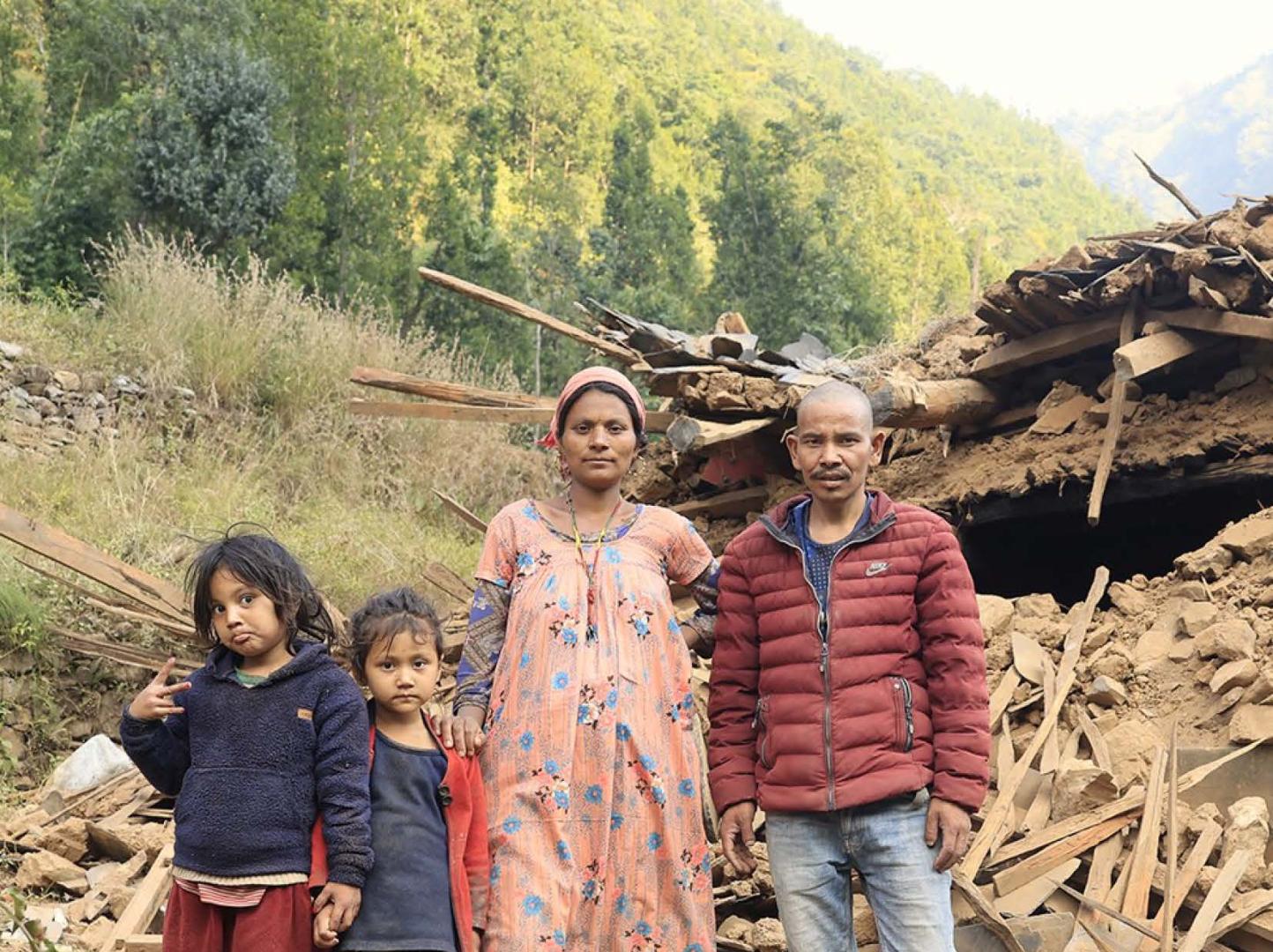
Nepal’s Flash Appeal calls for US$49.5 million to support over 84,000 people affected by the catastrophic floods in northern Nepal.The four-month appeal supports the Government-led response to urgent humanitarian needs across six affected districts, including food, shelter, health care, clean water and sanitation, protection and other essential assistance. As winter approaches, the appeal aims to reach affected communities — including those in remote and high-altitude areas — with timely, coordinated support while helping families protect their livelihoods and begin to recover.

Story
09 October 2026
The Damage You Cannot See
Sonam(name changed) was 58 when the river took her son in Dhunche. He was the household's only earner and had just bought a vehicle on a loan. Now the loan was hers, and so were his 25-year-old widow and their two small children. She stopped eating, then sleeping. The headaches came, then the nausea, then an exhaustion that would not lift. Her home far from any health post, she never thought of seeing a doctor. Neighbours finally took her to hospital, where, trembling, she was sent to the UNFPA-managed One-stop Crisis Management Centre. There, case manager Sajana Rai took her into a quiet room, handed her a glass of water and held her hands. Then it came out her resons: the flood, and the husband who had abused her and left. "I was already abused like this at home," Sonam said, her voice breaking, "and now my son is gone."Hers is one of over 84,000 lives the flood upended on 26 August. The National Disaster Risk Reduction and Management Authority counts over 1,400 dead and 5,000 still missing, leaving families suspended between grief and hope. In Nuwakot, parents still wake at night and run uphill, sure another surge is coming. The river went back between its banks weeks ago. The fear did not."At Trishuli Hospital, Dr Shitanshu Dhakal noticed something invisible: "the mental trauma experienced by all those directly or indirectly affected by the floods.” In Betrawati, UN Resident Coordinator Lila Pieters Yahia heard Sonam's story in other voices. "Almost every family I met had lost the person who was the financial and emotional anchor of their home, leaving them to navigate profound personal loss while facing unsustainable debt. True recovery must look beyond economic relief to address the severe mental health toll of carrying both unresolved grief and future financial uncertainty," said the UN Resident Coordinator, Lila Pieters Yahia. Displacement, crowded shelters and lost income raise the risk of gender-based violence, trafficking, child labour and child marriage, while older people and persons with disabilities lose medicines, assistive devices and carers.Children carry grief differently, often without words. In a UNICEF-supported tent at a Nuwakot hospital, they slowly find ways, with counsellors, to name what happened. An estimated 17,000 children need this support, and 541 have been separated from their families. The Health Cluster, led by the Ministry of Health and Food Safety with WHO, and UNICEF and UNFPA, is trying to close that gap. UNICEF and partners offer psychological first aid, counselling and confidential care for survivors of violence. WHO has trained 120 school health nurses to notice a struggling child, and IOM 24 field staff to prevent sexual exploitation and abuse. So far, nearly 2,900 people have received specialist mental health care and over 1,900 community-based psychosocial support. The Flash Appeal puts health care for all 84,270 people at US$7.6 million until 31 December. That is about seven cents of every appeal dollar.Sonam went home with medicines, the 1145 helpline and her case manager's number, and follow-up calls have helped her sleep again. But she is back in a remote village with a loan she did not take, a household that depends on her, and a grief that will not keep to the timeline of an emergency appeal."Trauma is sudden," Rai says, "but recovery is progress." Above the Trishuli, Roads and bridges can be rebuilt on a schedule. Healing what the flood did inside people depends on someone still being there to pick up the phone.**Name changed to protect her privacy.
1 of 5

Story
26 September 2026
One Month Since the Rasuwa Floods: Six Ways Coordinated Action is Making a Difference
When the Bhote Koshi and Trishuli rivers surged on 26 August, the water took lives, homes, roads, bridges and livelihoods with it. Communities that had been only hours from Kathmandu that morning were cut off by nightfall.Latest Government figures record over 1,451 people who have lost their lives and over 5,000 who remain missing. Thousands more lost homes, livelihoods and access to basic services. The scale of the destruction extends beyond the human toll, with 13 hydropower projects affected and major impacts on transport, trade and tourism, with the overall damage and losses estimated at around 4–5 per cent of Nepal’s GDP. Amid that loss, the priority was coordination with the Government, including the National Disaster Risk Reduction and Management Authority (NDRRMA) and the Ministry of Home Affairs, followed by coordination with the UN, OCHA, IFRC, Member States and humanitarian partners. The Government established the response and coordination mechanisms, with the UN and partners coming in to support them. One month on, here are six ways the Government, the UN, humanitarian partners and local authorities have worked together to reach more than 64,000 people through the UN's joint response. 1. Early coordination enabled early response In the first hours, with roads gone, communications down and communities inaccessible, there was no complete picture of what had happened.The Government led from the outset, with the National Disaster Risk Reduction and Management Authority (NDRRMA) and the Ministry of Home Affairs establishing the response mechanisms and priorities. UN Resident Coordinator Lila Pieters Yahia and UN humanitarian agencies worked in support, together with Emergency Relief Coordinator Tom Fletcher, OCHA, IFRC, Member States and other partners, meeting daily through the emergency phase. Additional expertise followed, including an OCHA surge team and a United Nations Disaster Assessment and Coordination team. US$2.5 million was released through the UN Central Emergency Response Fund, alongside contributions from the United Kingdom, Norway and Australia through the Multi-Partner Trust Fund. 2. Delivering as one to ensure needs are met When a family loses its home, it may need shelter, food, clean water, medical care, protection and schooling for its children, all at once.The coordinated response brings together clusters covering health, food, shelter, water and sanitation, protection, education, nutrition, camp management, logistics, early recovery and coordination. WFP has supported logistics and food security; UNICEF, water, protection, education and child health; UNFPA, pregnant and lactating women, adolescents, psychosocial support and dignity kits; and WHO, primary health care, advice on DNA testing and managing human remains. Thanks to the Ministry of Health and Population, WHO, UNICEF and partners, no communicable disease outbreak has been reported. Just over a week after the floods, the UN office in Bidur became a coordination hub near affected communities, helping the local government coordinate more than 100 NGOs and associations. With local authorities, the Nepal Red Cross Society and IOM, the team has identified temporary shelter options and tracked who has been reached and where gaps remain.3. Coordination translated into things people needed In the early days, communities asked for simple things: rice and lentils, drinking water, tents and solar batteries to light a room, charge a phone and reconnect with the outside world.Over the past month, more than 30,000 people have received food assistance and more than 54,000 have been reached with water, sanitation and hygiene services. Families have received shelter materials and household items, while emergency medical care and safe spaces for women and children continue. Psychosocial support has been especially important. People watched loved ones disappear under the flood wave, and many lost their breadwinners. Older people and working-age women have suddenly become heads of household while caring for traumatised family members, leaving little time for their own recovery.4. When roads disappeared, the response found another way Destroyed roads and bridges in Rasuwa, steep terrain and monsoon rains that could wash out routes without warning made delivering basic supplies a logistical challenge. Helicopters carried food and relief supplies to more than 1,600 households cut off by road. Supplies moved through staging areas and forward hubs as partners tracked changing road conditions. 5. Local needs were carried to the international stage The Resident Coordinator visited affected areas twice in the first ten days, meeting communities, local authorities, Government officials, security forces and humanitarian partners. What she heard, together with assessments on the ground, shaped the response and was carried to donors.On 4 September, the Government and United Nations launched a US$49.6 million Flash Appeal to support more than 84,000 people across 17 municipalities under the overall leadership of the National Disaster Risk Reduction and Management Authority (NDRRMA). As of today, US$22 million has been pledged against the appeal, including through the Nepal Sustainable Development Cooperation Framework Fund, and efforts are accelerating to close the gap. The response has also been a national effort. Across Nepal, people mobilized to support affected communities, with local communities, youth, the private sector and philanthropic organizations stepped forward alongside international partners, while people across the country and globally contributed in large numbers to the Prime Minister's Disaster Relief Fund. 6. Turning from response to recovery A month later, families remain displaced. An estimated 2.2 million tonnes of debris still need to be cleared, safe land must be found for those unable to return home, and in upper Rasuwa, winter is approaching.The next phase must connect relief with recovery: restoring services and livelihoods, reopening access and helping communities rebuild safer and more resilient. Longer-term reconstruction will be led by the Government and informed by its forthcoming Post-Disaster Needs Assessment. The water has receded and the headlines have moved on, but for affected families, recovery is only beginning. The coordinated effort of the first weeks, under the Government's leadership, must now be sustained until families can move from surviving to rebuilding their lives.
1 of 5

Story
24 September 2026
Silence Speaks Louder: Ensuring Protection After the Floods
“Before the flood, we were constantly dealing with reports of domestic abuse and harassment. We knew where the risks were and we were able to respond. Now, the reports have simply stopped.”For a female police officer working in one of Nuwakot's temporary holding centres, the silence is not necessarily reassuring. Across 20 holding centres accommodating more than 2,500 displaced people, no GBV or child-harassment cases have been formally reported at the time of assessment. But the absence of reports does not necessarily mean the absence of risk.Women who may have already been living with violence or other forms of vulnerability remain part of the wider affected community. The flood has disrupted the support systems they relied on, while displacement has created new barriers to privacy, communication and help-seeking. Inside the centres, families are living in crowded conditions, often sharing limited space with people they do not know. Privacy is scarce. For someone who has experienced violence, finding a safe and confidential moment to speak about it can be difficult.Police have established separate spaces for men and women across the centres to support safety and order. But the pressure is increasing. Limited sanitation facilities, overcrowding and the arrival of people seeking relief supplies are making it increasingly difficult to identify and prioritise those who have lost their homes and are most in need of assistance.The needs are often basic but deeply personal. Women have been asking for sanitary pads, underwear and other dignity items, small necessities that can become difficult to access during displacement.“Our police forces are working around the clock to keep these centres safe. We can provide security. We can keep order. We can help reunite families. But these people need more than security now. They need care, protection, dignity, and someone who knows how to help them begin rebuilding their lives.” Female Police Office, DPO For children, the disruption has been particularly profound. Some were separated from their families during the floods, losing not only their homes and belongings, but also the familiar people and routines that made them feel safe. Police officers and others supporting the centres have been sitting with children on concrete floors, talking with them, playing simple games and creating moments of distraction while efforts continue to locate and reunite families. But the children are beginning to show the strain of prolonged displacement.The games do not hold their attention for as long. They are becoming restless. They are asking more questions. And they continue to look for their parents.” Caretaker, Holding Center, BidurThe experience is a reminder that as the immediate emergency response continues, protection, psychosocial support, family tracing and safe referral mechanisms are just as important as food, water and shelter. Restoring a sense of safety and dignity will be an essential part of helping affected families and children move from surviving the disaster towards recovery.
1 of 5

Story
24 September 2026
After The Floods: Protecting Food, Livelihoods and Recovery
On 26 August 2026, a high-intensity flood surge tore through the transboundary Bhote Koshi watershed. The immense flash flood, with mud and rocks, swept downstream into Rasuwa, Nuwakot, and Dhading districts, destroying homes, farmland, and livestock shelters, and leaving hundreds of families with nothing but what they could carry to higher ground. For communities already living close to the margins in Nepal's mid-hills, the flood was a sudden and severe blow to lives and livelihoods alike.The Food and Agriculture Organization (FAO) Nepal responded rapidly to support the affected communities. Working in close coordination with the Government of Nepal, FAO immediately set up a response operation built around four pillars: emergency food distribution for displaced households, urgent veterinary care to protect surviving livestock, satellite-based mapping to understand the true scale of the damage, and early planning for longer-term recovery. Relief consignments were mobilized straight away reaching the hardest-hit villages shortly after the disaster struck.Getting Food to Affected FamiliesFAO Nepal dispatched a total of 23,100 kg of emergency food supplies, enough to support more than 700 affected households across the three districts. The operation was sequenced to reach the worst-affected communities first: relief kits reached Rasuwa and Nuwakot on 27 August, followed by Dhading on 28 August, after field teams completed an on-the-ground assessment visit to Galchi Rural Municipality to confirm needs before supplies were released.
Each household kit was designed to cover a family's most urgent nutritional needs in the immediate aftermath of the flood, when cooking facilities, clean water, and local markets are often unavailable or destroyed. Including a household water purification set with 8400 liters of drinking water was a deliberate public health measure, as flood-affected areas face increased risk of waterborne diseases when safe water sources are damaged or contaminated.In the just two days, FAO Nepal's food distribution reached over 700 households across three districts — a swift, coordinated response that gave flood-affected families a measure of stability and dignity when they needed it most. It was the first of several fronts on which FAO worked to support Nepal's recovery.
Each household kit was designed to cover a family's most urgent nutritional needs in the immediate aftermath of the flood, when cooking facilities, clean water, and local markets are often unavailable or destroyed. Including a household water purification set with 8400 liters of drinking water was a deliberate public health measure, as flood-affected areas face increased risk of waterborne diseases when safe water sources are damaged or contaminated.In the just two days, FAO Nepal's food distribution reached over 700 households across three districts — a swift, coordinated response that gave flood-affected families a measure of stability and dignity when they needed it most. It was the first of several fronts on which FAO worked to support Nepal's recovery.
1 of 5

Story
16 September 2026
WHO Supports Immunization Programme Continuity in Nepal's Flood-affected Areas
Beyond the immediate destruction of homes and roads, the flash floods that swept through Rasuwa, Nuwakot and Dhading districts on 26 August 2026, also damaged critical local health infrastructure, disrupted routine vaccine services and left the affected families more vulnerable to vaccine-preventable disease outbreaks.In response to the heightened risks facing the displaced population, the Government of Nepal, with technical support from WHO and partners, has resumed routine immunization services, expanded preventive vaccination and enhanced disease surveillance. As damages to the drinking water and sanitation structures increased the risk of waterborne diseases, an oral cholera vaccine (OCV) campaign was launched in Rasuwa and Nuwakot on 10 September. As of 15 September 2026, over 50 000 people aged one and above have received OCV. Along with OCV, Tetanus Toxoid-containing vaccines are also being provided to health workers, frontline responders and rescue workers to protect them from tetanus in high-risk environments.To drive these efforts, WHO has provided technical guidance, and supported campaign microplanning and coordination. Three Surveillance and Immunization Medical Officers (SIMOs) have also been deployed in Rasuwa and Nuwakot to support routine immunization monitoring, campaign preparedness and implementation, vaccine safety surveillance, active case findings, and investigation of suspected vaccine-preventable disease (VPD) cases. Disease surveillance has also been strengthened across all three affected districts. Real-time telephonic disease surveillance has been initiated in 12 municipalities across the three districts. WHO has also provided 24 VPD sample collection kits and 100 field-level banners to strengthen identification and reporting of suspected cases and 50 Adverse Event Following Immunization (AEFI) kits for use during the routine immunization and vaccination campaigns. Preparations are also underway for measles-rubella (MR) vaccination campaign targeting children aged six months to 15 years in Rasuwa and Nuwakot districts, with a particular focus on children living in temporary settlements and holding centres.“Disruptions to routine health services increase the risk of vaccine-preventable disease outbreaks, making preventive vaccination a critical part of the emergency response,” said Dr Allison Gocotano, Acting WHO Representative to Nepal.“As communities recover, WHO will continue to work with the Government of Nepal and partners to maintain essential health services, support routine immunization and supplementary immunization activities, strengthen surveillance and outbreak preparedness and response.” ---- Source: WHO Nepal
1 of 5

Press Release
11 October 2026
UN Nepal Statement: Budhi Gandaki River Flooding
As the Government assesses the full extent of the impact, the UN is working alongside government authorities and supporting the National Disaster Risk Reduction and Management Authority (NDRRMA) in conducting rapid assessments. FAO Nepal has deployed a LiDAR drone and OCHA is coordinating with UNOSAT to activate the International Charter for satellite imagery and analysis, particularly in hard-to-reach areas. WFP Nepal provided three trucks to deliver the Government’s food and non-food items from the Humanitarian Staging Area. 100 kg of high-energy biscuits are being dispatched as many households have lost their homes. The Humanitarian Country Team stands ready to support the Government-led response as needs emerge.Coming just weeks after the Rasuwa floods, this latest disaster underscores the urgent need for continued investment in early warning systems, preparedness and resilience-building in Nepal.
1 of 5
Press Release
04 September 2026
Nepal floods: UN and partners launch $49.6 million emergency appeal
KATHMANDU, 4 September 2026 — The United Nations and humanitarian partners today launched a US$49.6 million flash appeal to deliver life-saving relief to over 84,000 people affected by catastrophic flash floods and landslides across northern Nepal.Operating under the overall leadership of the National Disaster Risk Reduction and Management Authority (NDRRMA), the four-month response plan addresses critical operational gaps identified by the Government to prevent further hardship and disease outbreaks as winter approaches in high-altitude Himalayan communities. The United Nations and humanitarian responders are working in partnership with ongoing Nepalese emergency operations. The catastrophe, triggered on 26 August, has claimed over 1,250 lives, leaving thousands missing and displacing entire villages across the Rasuwa, Nuwakot, and Dhading regions. Survivors face tragic losses of family members, homes, and rural livelihoods. Widespread destruction of critical infrastructure has severed transport routes, disrupted power grids, and washed-out local water supply and sanitation systems, leaving isolated populations without basic necessities.To mitigate immediate suffering and safeguard vulnerable populations, the joint response targets essential humanitarian needs across multiple sectors. Direct cash transfers will be deployed where local markets remain functional to give families the dignity to buy essential goods while stimulating local economies. To protect displaced communities before winter sets in, aid teams will distribute cold-weather shelter materials and supply portable solar units to households to restore essential power and light in off-grid zones.Humanitarian operations will also restore damaged water networks, deploy rapid purification systems, and deliver hygiene supplies to halt the spread of waterborne illnesses. Emergency mobile clinics will provide immediate medical treatment and nutrition support, while protection teams work to reunify children separated from their families. In addition, aid teams will distribute emergency food aid and manage surviving livestock to protect rural livelihoods."Families have lost everything: their loved ones, their homes, their livelihoods, swept away in minutes," said Lila Pieters Yahia, United Nations Resident Coordinator in Nepal. "Working under the Government's leadership, this appeal will get cash, shelter, health care, clean water and protection to the hardest-to-reach communities before winter closes in."Video: https://bit.ly/4gATyNx Photos: https://bit.ly/4A2wvD5 Link to Flash Appeal: https://reliefweb.int/report/nepal/nepal-rasuwa-flood-flash-appeal-4-september-2026
1 of 5
Press Release
24 July 2026
The UNSDCF Joint Steering Committee Reviews UNSDCF Progress and Endorses Roadmap for Next Cooperation Framework 2028–2032
The Committee reviewed progress, set priorities for the final eighteen months of implementation, and endorsed the roadmap for Nepal's next Cooperation Framework 2028–2032, formally launching a joint preparation process that will conclude with the signing of the new Framework in July 2027. It is prepared under the Government of Nepal and the United Nations Country Teams joint leadership and aligned with the Sixteenth Plan and Nepal's transition from Least Developed Country (LDC) status. Speaking at the meeting, Honourable Vice Chairperson Dr. Gunakar Bhatta appreciated the UN system for continued partnership in advancing the shared priorities, including the implementation of the Sustainable Development Goals, preparations for graduation from the Least Developed Country category, financing for sustainable development, climate action, and institutional strengthening. He further highlighted that emerging opportunities including population dividend, rapid digital transformation, clean energy potential and the global networks of diaspora can become powerful drivers of Nepal’s long-term prosperity. As the formulation of the UNSDCF 2028-32 has begun, he emphasized that the next Cooperation Framework must be ambitious and forward-looking, firmly aligned with national priorities and grounded in evidence, responding to the Nepal’s development need and aspirations.”The Committee took stock of results delivered through the current Framework: stronger climate and disaster resilience through the Climate Change Financing Framework, NDC 3.0, the Living Sagarmatha Mountain Resilience Strategy and anticipatory action; a national model linking school meals to local agriculture; expanded skills, finance and enterprise opportunities for women and young people; private sector engagement and decent jobs/employment generation and progress on ending child marriage, addressing gender-based violence, the National CEDAW Roadmap, legal identity reforms and electoral support, building a more inclusive society. Joint UN and Government efforts have strengthened Nepal's health system, eliminating rubella, sustaining kala-azar control and immunizing millions of children and adolescent girls, gains that will now inform investments in human capital and inclusive economic prosperity.With less than five years to 2030 and LDC graduation approaching, discussions centred on acceleration: expanding women's participation in the economy, investing in skills and decent jobs for young people, strengthening entrepreneurship and small and medium enterprises, and advancing climate-resilient growth and digital transformation. Amid declining Official Development Assistance globally, the United Nations stands ready to support the Government in maximizing the impact of existing resources, strengthening capital expenditure performance, accelerating project implementation and advancing innovative financing solutions.Speaking at the occasion, H.E. Ms. Lila Pieters Yahia said “Accelerating the SDGs is one of the most effective pathways to faster economic growth, stronger resilience and a smooth transition from LDC status. But this cannot be achieved through business as usual. It demands investing in women and young people, in skills, decent jobs and entrepreneurship, and in climate-resilient and digital growth, with development firmly anchored in human rights, gender equality and inclusion. Through strong national leadership and effective partnerships, Nepal can build a more resilient, prosperous and inclusive future.” For more details, please contact:Simrika Sharma; National Information Officer; Email: simrika.sharma@un.org
1 of 5
Press Release
09 February 2026
UN Resident Coordinator Lila Peters Yahia Presents her Credentials to Rt. Honorable Prime Minister of Nepal Sushila Karki
Following her official appointment as United Nations Resident Coordinator in Nepal by the UN Secretary-General António Guterres, with the approval of the Government of Nepal, Ms. Pieters Yahia of Canada today presented her credentials, marking the formal commencement of her mandate in the country.Upon presenting her credentials, Ms. Pieters Yahia commended Nepal’s sustained leadership in advancing global peace and security, notably as the largest troop-contributing country to UN peacekeeping. She also underscored the United Nations’ partnership with Nepal in accelerating progress toward the Sustainable Development Goals by 2030 and in supporting the realization of the country’s 16th national plan and priorities for inclusive growth, resilience, sustainable development, digital transformation, and expanded opportunities for young people.“It is an honour to lead the United Nations’ team in Nepal at this important moment for the country. In my meeting today with Her Excellency the Prime Minister, I reaffirmed the United Nations’ respect for Nepal’s sovereign democratic processes and peaceful, credible elections. We discussed national priorities, including expanding employment opportunities for young people so they can build their future at home rather than migrating out of necessity, advancing peace, inclusion and sustainable development, and strengthening resilience to acute climate vulnerability despite Nepal’s negligible emissions. The United Nations remains fully committed to supporting these priorities and ensuring that no one is left behind,” she said.Ms. Pieters Yahia brings over 25 years of experience across development and humanitarian contexts in senior management and strategic leadership roles. She most recently served as the United Nations Resident Coordinator in Mauritania.
1 of 5
Press Release
05 January 2026
UN in Nepal Advances Efforts to Survivor-Centered Protection from Sexual Exploitation, Abuse and Harassment Across Government Ministries
As part of this effort, UN Nepal, through the UN PSEA Working Group, convened a high-level PSEAH workshop for Joint Secretary from across the Government of Nepal, in collaboration with the Ministry of Women, Children and Senior Citizens and with funding support from the International Organization for Migration (IOM). The workshop brought together more than three dozen senior government officials and UN agencies to strengthen collective understanding of PSEAH and to translate policies into practical, operational actions. Opening the workshop, Ms. Hanaa Singer Hamdy, the United Nations Resident Coordinator in Nepal said, “The urgency of this work is clear. Sexual exploitation, abuse and harassment disproportionately affect women and girls, undermine trust in institutions, weaken service delivery, and ultimately erode social and economic resilience. Addressing these risks is central to Nepal’s national priorities—accelerating the SDGs, strengthening accountability and transparency, and ensuring social protection systems genuinely safeguard the most vulnerable.” She added. Hon’ble Justice Ms. Sapana Pradhan Malla encouraged ministries to identify clear entry points for integrating PSEAH into operational frameworks. She further urged participants to develop practical recommendations with clearly defined roles, timelines, and accountability mechanisms. Women’s rights activist and UN Convention on the Elimination of All Forms of Discrimination against Women (CEDAW) Committee Member, Ms. Bandana Rana underscored the importance of aligning UN mechanisms with state responsibilities and national priorities, while strengthening transparency and accountability across public institutions. Participants identified practical entry points to integrate PSEA and the Sexual Harassment at Workplace (Prevention) Act into sectoral planning, institutional procedures and local-level service delivery, with a focus on prevention, clear reporting pathways and survivor-centered responses. A panel discussion led by Dr. Krishna Hari Pushkar, Secretary at the Ministry of Labour, Employment and Social Security, and Mr. Parashwor Dhungana, Secretary at the Ministry of Law, Justice and Parliamentary Affairs, highlighted existing strengths within government policies and institutional frameworks, including critical gaps in addressing SEAH risks faced by migrant workers across different stages of migration. Building on Nepal’s national legislation particularly the Sexual Harassment at Workplace (Prevention) Act 2071, the workshop focused on strengthening PSEAH systems in practice by embedding safeguards into staffing arrangements, institutionalizing training, and expanding community-based complaints, safe and accessible reporting, and victim-centered response mechanisms. # Notes to the editor: PSEAH is a core global priority of the United Nations system, guided by the UN Secretary-General and the Inter-Agency Standing Committee (IASC) Six Core Principles. These frameworks underscore zero tolerance for sexual exploitation, abuse and harassment, survivor-centered responses, accountability, and robust prevention mechanisms in both workplace and service delivery contexts. These commitments are further reinforced through the United Nations Sustainable Development Cooperation Framework (UNSDCF), which calls for the mainstreaming of PSEA measures across all UN-supported programming. For more information, please contact:Tej Maya Dangol, UN PSEA Coordinator; UNRCO Nepal, tej.dangol@un.orgPratibha Rijal, Project Officer (PSEA) IOM Nepal, prijal@iom.intDipti Shah, Communications Focal Point; IOM Nepal, dshah@iom.int
1 of 5
Latest Resources
1 / 11


Resources
24 November 2025

1 / 11